Custom Web Application Development, Built to Run Your Business
We design and build the platforms your business runs on — marketplaces, booking and matching systems, membership commerce, and the back-office tools your team uses every day. Every build ships on hardened, access-controlled infrastructure, is yours to own outright, and is quoted as one fixed number before a line of code gets written.

A website tells your story. A web application runs your business — inventory, bookings, payouts, permissions, reporting. When off-the-shelf software forces your team into someone else's workflow, or a stack of subscriptions starts costing more than it saves, the fix is a platform built around how you actually operate. We've shipped platforms handling live marketplace transactions, thousands of student records a term, and real-time commission payouts — fixed-price, owned outright by the client, still running today.
Platforms that run the business, not just represent it
A marketing site tells people who you are. A custom platform is the software your team, your customers, or your vendors use every day — and it's the harder, more valuable build.
Marketplaces & multi-vendor platforms
Unified catalogs, per-vendor storefronts, vendor onboarding with KYC, and one order-and-payout pipeline behind it all — the architecture behind YoPekka's marketplace, live nine weeks after kickoff.
Booking & matching platforms
Scheduling rules, availability logic, and profile-matching engines that filter and rank by dozens of criteria in real time — the same matching logic running a verified-profile matrimony platform we built and still support.
Result & record-management systems
Role-locked systems that process thousands of records a term and generate documents on demand without manual review — the model behind Perfect N Results' school result-management platform.
Membership commerce
Tiered membership, real-time commission and payout engines, and purchase-linked rewards — built for platforms where the business logic is the product, not just the storefront skin on top of it.
Back-office & admin tools
Role-based dashboards, reporting exports, audit trails, and the internal tools your operations team actually opens every morning — usually the software nobody outside the company ever sees.
API & payment integrations
Stripe, PayPal, shipping carriers, CRMs, and whatever system your business already runs on — wired into the platform during the build, not bolted on after launch as an afterthought.
Why custom beats a stack of SaaS subscriptions
Most businesses don't start with a custom platform — they start with three or four SaaS tools stitched together with Zapier, and the seams show within a year. Per-seat pricing scales against you as you grow. Your workflow bends to fit someone else's product instead of the other way around. And when a vendor changes their pricing tier or retires a feature, your business model changes with it, whether you agreed to that or not.
That's not an argument against SaaS everywhere — a tool that does one job well is often the right call. It's an argument for owning the system once your business logic, your data, or your competitive edge lives inside it.
- No per-seat licensing — one flat cost, however many users you add
- Business logic built around your actual workflow, not a workflow you adapt to fit a template
- You own the source code, the database, and the infrastructure — outright, no vendor lock-in
- One system instead of five subscriptions glued together with integrations that break silently
- Data stays on infrastructure you control, not a shared multi-tenant SaaS instance
- No forced upgrades when a vendor changes their pricing tier or retires a feature you depend on
Is a Custom Platform the right build?
Not every project needs this tier. Here's how to tell before you fill out the quote form.
Good fit
- Your business logic doesn't fit a SaaS template — multi-role permissions, unusual approval flows, or industry-specific rules
- You're duct-taping together three or more subscriptions and paying each one to talk to the others
- The software has to handle real transactions, real customer data, or records you can't afford to get wrong
- You want to own the platform outright, not rent access to it indefinitely
Probably not — yet
- You need a marketing website, not a system — the Business Pro package is the better starting point
- You want to launch in under a month — Custom Platform is a 10–16 week build, by design
- The business model isn't validated yet — a smaller build to test the idea is the smarter first move
Security is not an add-on.
It's how we build.
A marketing site that gets defaced is embarrassing. A platform that leaks customer records or lets one vendor see another vendor's orders is a different category of problem. Custom platforms hold the data that matters most — accounts, payments, business records — so we treat access control and authentication as core architecture decisions made in Discovery, not settings toggled on before launch.
If you already have a Laravel platform you're not confident in, the same review runs as a standalone engagement — see the Laravel Security Audit page for the fixed-price rescue option.
- Hardened authentication — salted password hashing, rate-limited login attempts, secure session handling
- Role-based access control on every route and every API endpoint, not just the admin panel
- Input validation and sanitization on every form, file upload, and API call
- Protection against SQL injection, IDOR, and the OWASP Top 10 classes of vulnerability
- Encrypted secrets and environment variables — nothing sensitive committed to source control
- A full security audit before launch, included in the Custom Platform price — not an upsell
How a Custom Platform gets built
Five phases, each one signed off before the next starts. No surprise scope, no invoice you didn't see coming.
- Step 01
Discovery Sprint
A paid, structured sprint mapping your workflow, user roles, and integrations. This is where "from $15,000" becomes a real, fixed number.
- Step 02
Architecture Document
A written technical spec — database schema, API design, integrations, security model — that you approve before development starts.
- Step 03
Milestone Builds
Development ships in scoped milestones with staging links you can click through, not a black box until launch day.
- Step 04
Security Review
A full audit of authentication, access control, and data handling before anything goes live — see the security section below.
- Step 05
Launch + Care Plan
We deploy, watch the first weeks closely, then hand off into a Priority care plan built for business-critical platforms.
Custom Platform pricing: from $15,000
Custom Platform builds start at $15,000 and are scoped into an exact number during the Discovery Sprint — you approve the figure before development begins, and it doesn't move once milestones are signed off.
Custom Platform
Bespoke multi-role platforms — marketplaces, SaaS, web apps.
- Delivery
- 10–16 weeks
- Bespoke Laravel platform, multi-role architecture
- Hardened authentication + custom business logic
- API integrations + admin/reporting dashboards
- Security audit included
- Milestone-gated delivery
What moves the number
Five factors decide where a Custom Platform lands above the $15,000 floor.
- Number of user roles and how different their permissions are
- Third-party integrations — payment gateways, shipping APIs, CRMs, SSO providers
- How much of the admin and reporting side needs custom building versus off-the-shelf tools
- Data migration from an existing system or spreadsheet
- Timeline — compressed delivery windows cost more to staff
Two platforms, two different problems
Real builds, real URLs — click through and look for yourself.
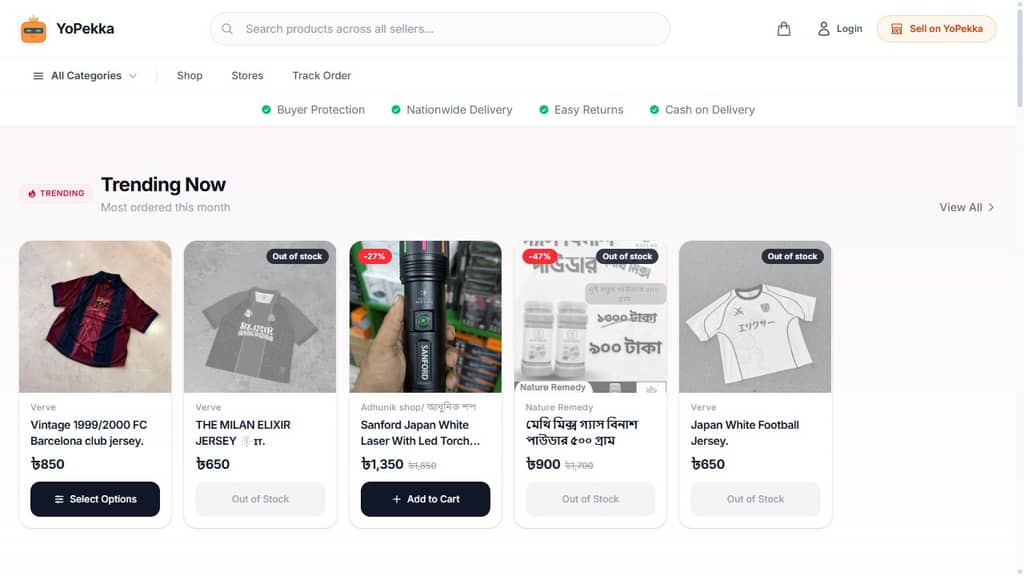
A hybrid e-commerce platform built as both a multi-vendor marketplace and a set of private, per-vendor storefronts sharing one inventory and order pipeline. Vendor onboarding runs through a KYC flow; checkout runs across five regional payment rails behind one unified API.
yopekka.com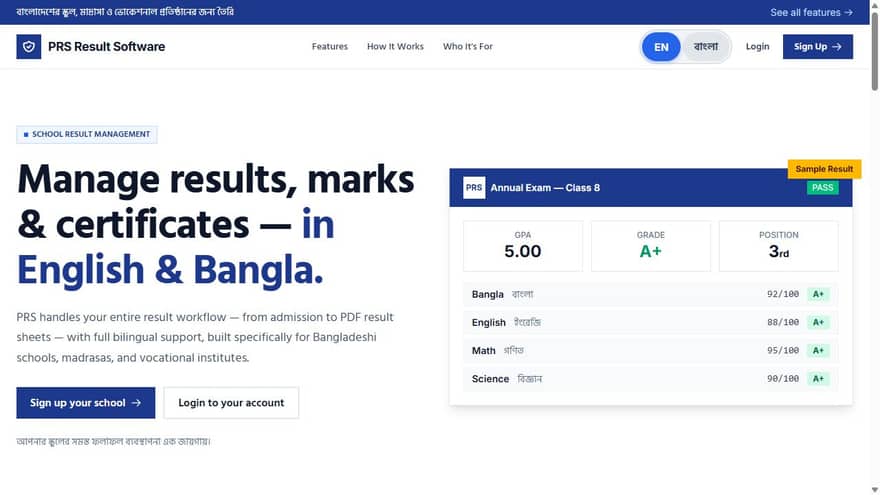
A result-management platform for schools — processing student records, generating certificates and mark sheets on demand, and locking every screen down by role so one account can never see another school's data. Software that has to be right every term, unattended, with no room for a manual patch on publish day.
perfectnresults.comExplore the rest of the stack
Custom platforms — your questions
Pricing, ownership, security, and timeline — the things buyers actually ask before commissioning a build.
What does "from $15,000" actually mean?
How long does a Custom Platform actually take?
Do I own the code and the database when it's finished?
What does the included security audit actually check?
How do payments work on a project this size?
What happens after launch — do you disappear?
Can you integrate with the tools we already use?
› start a project
Ready to build the platform your business actually needs?
Tell us what you're building. We reply within one business day, and you'll have a scoped, fixed quote within two business days of a Discovery Sprint.